
Views: 0 Author: Site Editor Publish Time: 2026-06-21 Origin: Site


The architectural shift toward open-plan spaces creates a critical demand in commercial and residential builds. Modern, Scandinavian-inspired design must coexist seamlessly alongside effective acoustic mitigation. Buyers often face a frustrating choice when designing these areas. They must select industrial-looking foam panels offering high performance but poor aesthetics. Alternatively, they pick standard wood paneling providing high aesthetics but creating severe reflective acoustic hazards.
The 3D Wood PET Acoustic Slat Wall Panel bridges this exact gap beautifully. It combines essential structural sound absorption alongside premium interior finishes. This article serves a highly specific purpose. We provide architects, contractors, and interior designers a completely objective, specification-driven framework. You will use this guide to evaluate, shortlist, and expertly install these acoustic solutions.
Acoustic Functionality: 3D wood PET panels manage reverberation and echo (NRC 0.6–0.8+); they are sound absorbers, not soundproofing barriers.
Material Synergy: The 3D fluted wood slats scatter high-frequency sound, while the high-density PET (polyethylene terephthalate) felt backing absorbs mid-to-low frequencies.
Compliance Matters: Commercial applications require verification of Class A or B fire ratings and low-VOC/eco-friendly certifications.
Installation Impact: Mounting methods (direct-to-wall vs. on battens with an air cavity) drastically alter the final acoustic performance.
These panels rely on a carefully engineered composite structure. Three distinct layers work together to achieve optimal acoustic control. We must examine each layer to understand the complete system.
Manufacturers typically engineer the front slats using a medium-density fiberboard (MDF) core. A real wood veneer, such as walnut or oak, covers this core. Some brands use durable melamine instead. This front face provides the rigid, reflective surface necessary for acoustic balance. It diffuses incoming sound waves across the room. Complete absorption creates an unnatural, "dead" sounding environment. You need this rigid surface to keep room acoustics lively yet controlled. The MDF core prevents the warping issues commonly seen in solid wood.
You will notice precise physical gaps between the individual slats. We call this the fluted 3D structure. These gaps are intentional and structurally critical. They allow incoming sound waves to pass directly through the panel front. The sound waves travel through these channels rather than bouncing straight back into the room. This fluted design breaks up standing sound waves effectively. It prevents the harsh flutter echoes often experienced in minimalist, hard-surfaced rooms.
A dense acoustic backing sits directly behind the wood slats. Factories produce this material from recycled polyethylene terephthalate (PET) plastics. This dense, porous felt acts like an acoustic sponge. It captures the sound waves traveling through the front slat gaps. As sound waves enter the porous material, they vibrate the microscopic fibers. This physical friction converts acoustic energy into trace amounts of thermal energy. It dissipates the noise harmlessly into the room.
You cannot evaluate acoustic products on visual appeal alone. You must rely on objective acoustic measurements. We use specific metrics to verify actual performance capabilities.
Acoustic professionals measure efficiency using the Noise Reduction Coefficient (NRC) scale. The scale ranges from 0.0 to 1.0. A score of 0.0 indicates total sound reflection. A score of 1.0 indicates complete sound absorption. A high-quality panel typically achieves an NRC rating between 0.6 and 0.8. The exact score depends heavily on your chosen installation method. We will explore mounting techniques later in this guide.
We must establish facts and dispel a common industry myth. These panels do not block sound from leaving a room. They are sound absorbers, not soundproofing barriers. You install them to fix internal room acoustics. They reduce distracting flutter echoes. They lower the overall reverberation time (RT60) in busy spaces like restaurants. They significantly improve human speech intelligibility in conference rooms. To stop sound transmission through walls, you need massive physical weight and structural decoupling.
Panel performance varies wildly across different sound frequencies. Direct wall mounting targets mid-to-high frequencies effectively. This specific range covers human speech, clinking glasses, and ringing phones. However, low-frequency sounds behave differently. Deep bass and heavy HVAC rumbles require targeted installation adjustments. You must introduce an air gap behind the panels to capture these longer sound waves.
Mounting Method | Expected NRC Range | Target Frequencies | Best Use Case |
|---|---|---|---|
Direct to Drywall | 0.40 - 0.60 | Mid-to-High | Offices, residential living rooms |
1-inch Wooden Batten (Air Gap) | 0.70 - 0.80 | Mid-to-Low | Restaurants, busy lobbies |
2-inch Batten + Mineral Wool | 0.85 - 0.95+ | Broad Spectrum | Home theaters, recording studios |
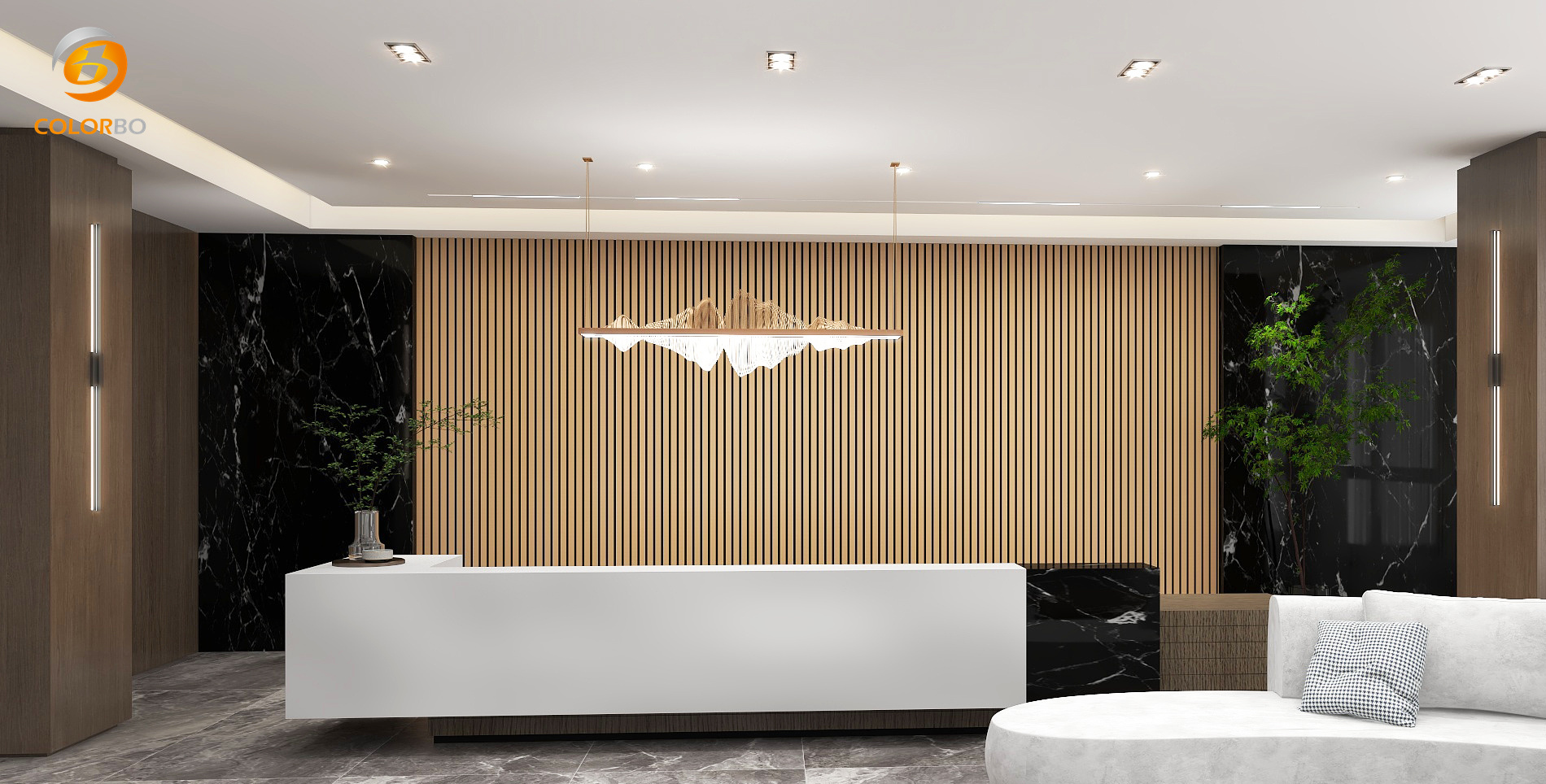
Commercial construction demands rigorous material scrutiny. You must evaluate the aesthetic finishes, ecological footprint, and safety certifications before specifying any product.
You must choose between natural wood and faux finishes. Natural wood veneers offer unmatched visual warmth and organic beauty. Species like walnut and white oak provide unique grain patterns. However, natural wood presents strict batch-matching realities. You may notice slight tonal variations between different production runs. Melamine or foil wraps offer a different value proposition. They provide perfect visual consistency across massive installations. They also reduce overall project costs significantly.
The PET felt density dictates the actual acoustic performance. Cheap panels use thin, low-density backing. Premium panels utilize highly dense PET felt. You should look for a minimum density of 1300g/m². Furthermore, examine the sustainability metrics. High-quality panels contain up to 60-100% post-consumer recycled materials. This recycling factor provides a major commercial advantage. It actively contributes toward LEED certification points in sustainable building projects.
Fire safety compliance is strictly mandatory for commercial applications. Standard residential panels rarely pass strict commercial fire inspections. You must verify Class A fire ratings for commercial hallways, lobbies, and ceiling installations. Manufacturers treat Class A panels with specialized chemical retardants. These treatments prevent rapid flame spread across the surface. We strongly warn against importing uncertified B2B panels. Installing non-compliant materials leads to failed fire inspections and highly expensive tear-outs.
Proper installation guarantees acoustic success. Even the highest-rated panel fails if installed incorrectly. You must select the right mounting technique for your specific room.
Your mounting strategy alters the final acoustic performance dramatically. You have two primary options.
Direct Mount: Installers glue or screw the panels straight onto the existing drywall. This method is much faster. It requires less labor and minimal structural planning. It yields excellent high-frequency absorption for typical speech environments.
Batten Mount: Installers attach horizontal wooden battens to the wall first. They mount the acoustic panels onto these battens. This creates a functional air cavity behind the panels. Installers often place mineral wool inside this cavity. This technique significantly boosts low-frequency absorption and raises the overall NRC rating.
Ceiling installations present unique structural challenges. You must account for gravity and total panel weight over time. Never rely exclusively on construction adhesives for ceiling mounts. Adhesives can degrade and fail unexpectedly. You must utilize secure mechanical fastening instead. Installers must drive heavy-duty screws fitted with large washers directly into the ceiling joists. This guarantees long-term safety above occupied spaces.
On-site modifications are inevitable. Walls are rarely perfectly square. Installers must cut the materials properly to ensure clean edges.
Horizontal Cuts: Use a high-quality track saw. Cut directly across the wooden slats to cleanly trim panel height.
Vertical Cuts: Use a fresh, sharp utility knife. Slice straight down through the PET felt between the individual wood slats.
Electrical Outlets: Carefully measure the receptacle box dimensions. Cut the required rectangular hole through both the slats and the backing using an oscillating multi-tool.
Procurement requires careful attention to detail. The market floods buyers with varying quality tiers. You need a structured framework to evaluate potential suppliers confidently.
Evaluate standard sizing dimensions during the planning phase. Suppliers generally offer standard 2ft x 4ft options alongside full-height 8ft or 9ft panels. Smaller panels create multiple visible horizontal seams across tall walls. These seams disrupt the seamless linear aesthetic. Full-height panels eliminate these horizontal joints entirely. They create a superior, uninterrupted visual flow.
Large commercial projects require absolute uniform aesthetics. You must order all required materials simultaneously. Ensure your supplier pulls the entire order from a single production batch. This guarantees consistent natural wood grain patterns. It also ensures exact stain coloration across hundreds of panels.
Shipping logistics pose a serious risk to product integrity. The MDF slat corners are highly susceptible to impact damage during transit. Ask potential suppliers about their packaging protocols. Premium suppliers use reinforced edge-protection and heavy-duty crating. Cheap packaging results in crushed corners and delayed installation schedules.
Understand your sourcing channels clearly. Big-box retailers serve residential needs well. They ship small cases directly to consumers for accent walls. However, commercial jobs require completely different supply chains. You should source directly from manufacturers for commercial minimum order quantities (MOQs). Direct B2B sourcing unlocks custom veneer finishes, verified acoustic testing data, and superior bulk pricing.
The acoustic slat panel is a highly engineered architectural solution. It goes far beyond a simple interior decorative trend. Your project success relies entirely on precise specification. You must match the panel's acoustic capabilities to the specific room requirements. You must also align material choices with strict local compliance codes.
Take actionable steps to move your project forward. Request physical samples from your shortlisted suppliers. You need to assess the veneer quality and feel the felt density yourself. Demand official acoustic test reports. Review the provided NRC curves to verify their performance claims independently. Finally, consult directly with your installation contractor. Discuss the realities of batten versus direct-mount installation early in your schematic design phase.
A: Yes, they absorb sound highly effectively. The dense PET felt backing absorbs the incoming sound waves. Concurrently, the rigid wooden slats diffuse the remaining sound across the room. This dual action significantly reduces distracting flutter echoes and lowers overall room reverberation.
A: Generally, no. Standard MDF cores and real wood veneers react poorly to heavy moisture. They can warp, expand, or delaminate in high-humidity environments. You should strictly install them in dry, climate-controlled areas unless the manufacturer specifically treats them for damp conditions.
A: Routine maintenance is very simple. Use a vacuum equipped with a clean, soft brush attachment. Gently vacuum the felt backing to remove loose dust. Wipe the wooden slats using a slightly damp microfiber cloth. You must avoid harsh chemical cleaners entirely to protect the veneer.
A: Yes, you can easily modify them on-site. The PET felt backing slices cleanly and quickly with a standard utility knife. You can trim the wooden slats horizontally using a fine-tooth hand saw or a guided track saw for precise, professional edges.