
Views: 0 Author: Site Editor Publish Time: 2026-08-16 Origin: Site


Architects, builders, and facility managers frequently face a tough dilemma in modern commercial construction. They must achieve optimal acoustic control without violating strict commercial fire codes. Balancing sound absorption and life safety presents a massive challenge during material selection. Many specifiers struggle to find solutions addressing both necessities effectively. While standard cement boards boast excellent heat resistance, adding wood fibers to create acoustic variants raises valid safety questions. Can a product containing organic material truly resist flames? You need reliable, empirical data to ensure building compliance and protect occupants. This guide objectively examines the true fire performance of these specialized building materials. We dissect critical testing standards, physical material limitations, and strict compliance criteria. You will gain the precise insights needed to support confident, code-compliant procurement decisions moving forward.
People often ask if these building materials can completely stop fire. We must deconstruct the terminology first. "Fireproof" is primarily a marketing term. Engineers and architects prefer "fire-resistant" or "non-combustible" when classifying materials. No material is truly fireproof. Even solid structural steel melts at extreme temperatures. Cement boards will not ignite. They do not feed a fire. However, they will eventually degrade structurally under sustained, extreme heat. You must understand this distinction clearly. It shapes how you approach comprehensive building safety.
Clients frequently wonder: is cement board fireproof enough for strict commercial codes? The answer lies in the composition. Portland cement plays a crucial role here. It forms a highly dense cementitious matrix. This matrix acts as a powerful thermal barrier. It absorbs heat energy efficiently. It prevents rapid heat transfer to underlying combustible framing. This protection lasts for specified test durations. You gain critical evacuation time during emergencies.
You might feel natural skepticism regarding the wood component. How can wood fibers survive extreme heat? The secret lies in the manufacturing process. Factories use a specialized mineralization process. They soak the raw timber fibers in liquid minerals. They then encapsulate every single fiber completely inside Portland cement. This thorough coating neutralizes the natural flammability. The organic material becomes shielded from ambient oxygen. Without oxygen, combustion cannot occur. This clever engineering creates a highly resilient building product.
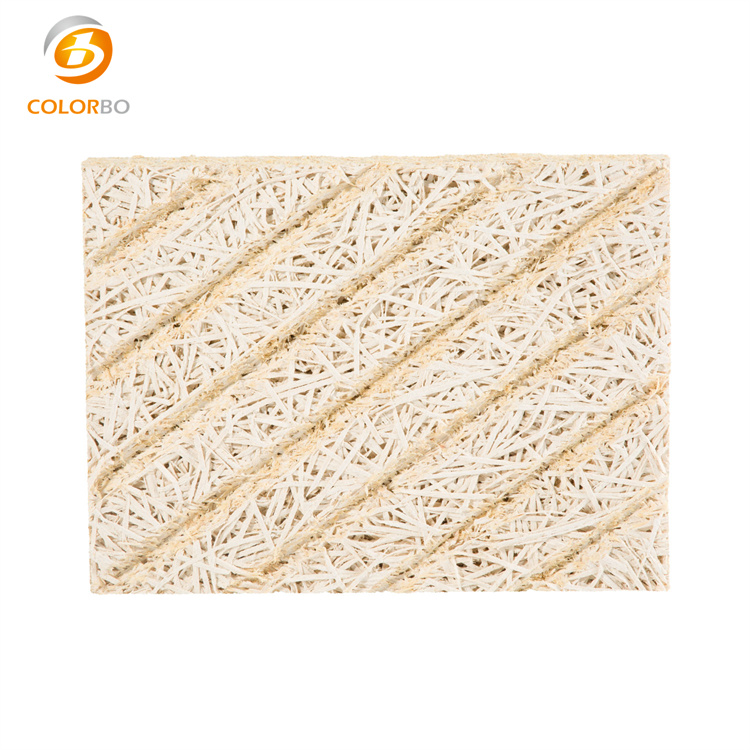
You cannot rely on verbal assurances for life safety. You must verify empirical testing data. Commercial spaces demand rigorous evaluation metrics. The Flame Spread Index (FSI) serves as the primary indicator. It measures how fast flames travel across the surface. A score between 0 and 25 is mandatory. This range qualifies the material for a Class A rating. Class A is non-negotiable for high-occupancy commercial spaces.
The Smoke Developed Index (SDI) is equally crucial. Smoke generation is often a more critical life-safety metric than flame spread. Most fire-related casualties result from smoke inhalation. You need materials producing minimal toxic fumes. High-quality fire-rated wood fiber cement boards excel here. The cement encapsulation prevents the wood from smoldering. This keeps the SDI well below the dangerous threshold of 450.
Procurement teams must request specific testing frameworks. You should look for these distinct certifications:
Watch out for red flags during procurement. Never accept "in-house testing" over certified laboratory results. Some manufacturers provide internal technical data sheets. These lack third-party verification. Always demand official reports from accredited testing bodies. Your liability depends entirely on documented, objective compliance.
Architects constantly weigh different material options. You must balance acoustic performance against fire endurance. Let us compare the most common market alternatives.
Consider perforated plasterboard first. Plasterboard is undeniably non-combustible. It offers excellent fire resistance. However, it often fails to control low-frequency reverberation. Sound passes through the perforations but bounces off hard backing. By contrast, mineralized acoustic panels trap sound waves within their porous surface. You get superior noise reduction coefficients (NRC) without sacrificing code compliance.
Next, evaluate traditional cement boards. Standard cement boards offer exceptionally high fire resistance. They are heavy, dense, and durable. Unfortunately, they provide zero acoustic benefit. They reflect sound waves entirely. They also carry high weight penalties. This increases structural load and installation labor. Using wood wool cement panels solves both issues. They weigh significantly less and absorb ambient noise efficiently.
Finally, we must acknowledge Magnesium Oxide (MgO) boards. MgO boasts a very high fire rating. It resists flames admirably. However, you must objectively note its potential risks. MgO boards often suffer from moisture absorption. They can experience "sweating" in humid environments. This causes corrosive weeping, damaging metal fasteners. Mineralized wood panels maintain stable moisture resistance. They do not sweat or corrode adjacent hardware.
| Material Type | Fire Endurance | Acoustic Absorption | Moisture Stability |
|---|---|---|---|
| Standard Cement Board | Excellent (Non-combustible) | Poor (Reflective) | High |
| Perforated Plasterboard | High | Moderate | Low (Prone to mold) |
| Magnesium Oxide (MgO) | Excellent | Poor | Low (Prone to sweating) |
| Mineralized Wood Panels | High (Class A) | Excellent (High NRC) | High (Stable) |
Modern architecture demands multi-functional materials. Specifying dual-function products simplifies your build-out. Using wood wool acoustic panels solves two compliance requirements simultaneously. You achieve required noise reduction coefficients. You also meet strict fire code mandates. Achieving this with a single SKU reduces labor dramatically. Installers hang one product instead of two. This minimizes material waste on site.
Environmental factors also play a supporting role. These panels utilize natural timber and cement. This composition offers a favorable carbon footprint. The manufacturing process often incorporates recycled water and materials. Life Cycle Assessments (LCA) usually rate them highly. They do not emit volatile organic compounds (VOCs). This supports healthier indoor air quality. While safety remains the primary focus, sustainability provides a strong secondary benefit.
However, you must manage aesthetic constraints carefully. Clients often want specific colors for their ceilings or walls. These panels can be painted successfully. Yet, improper painting destroys the fire rating. You cannot use standard oil-based paints. They add combustible mass to the surface.
Procuring a Class A material does not guarantee a compliant building. You must understand the assembly fallacy. The fire rating applies specifically to the manufactured panel. Real-world safety depends entirely on the whole system. Installing a Class A board on a non-compliant, untreated wood stud frame is dangerous. Lacking proper mineral wool insulation behind it is risky. This setup does not equal a 1-hour fire-rated wall. Fire can bypass the panel through joints or penetrations.
Installation best practices are absolutely critical. Installers must use specified non-combustible fasteners. Zinc-coated or stainless steel masonry screws are standard. Standard drywall screws will melt or shear off during a fire. This causes the panels to collapse prematurely. You must also address panel joints correctly. Depending on local codes, joints may require fire-rated acoustic sealants. Leaving gaps allows superheated gases to reach the combustible framing.
HVAC and mechanical penetrations require careful detailing. Acoustic ceilings often house lighting fixtures, sprinklers, and MEP (Mechanical, Electrical, Plumbing) components. Cutting holes in the panels compromises the fire barrier. You must handle these penetrations safely. Use fire-rated putty pads behind electrical boxes. Ensure lighting fixtures have approved fire-rated enclosures. Maintain required clearances around HVAC ducts. Coordinate these details with your mechanical engineers early in the design phase.
Navigating commercial building codes requires precise material knowledge. We have deconstructed the terminology surrounding fireproof materials. Mineralized acoustic panels may not be literally "fireproof." However, they safely meet rigorous commercial fire codes. They effectively stop flame spread and minimize toxic smoke. They also deliver the critical acoustic performance modern spaces demand. You no longer have to compromise sound quality for life safety.
Take proactive steps on your next project. Advise your specifiers to request detailed technical data sheets (TDS) immediately. Insist on seeing third-party fire testing certificates from UL or Intertek. Review the acoustic laboratory reports side-by-side with the fire data. Cross-reference these documents before shortlisting materials for any commercial build-out. Solid evidence guarantees compliance and protects your occupants.
A: You must observe strict clearance requirements. While these panels are non-combustible, they are primarily acoustic treatments. They are not specialized refractory bricks or heat-shielding materials. Prolonged exposure to direct, intense heat can degrade the cement matrix. Always defer to your local fire codes. Strictly follow the appliance manufacturer’s published clearance guidelines.
A: No, cutting them does not ruin the rating. The mineralization process encapsulates every single fiber throughout the entire board. It is not merely a superficial surface coating. Exposing the interior core reveals more cement-coated fibers. However, you must ensure the integrity of the total wall assembly is maintained after cutting.
A: Fire rating (like E84/Class A) refers specifically to surface burning characteristics. It measures how fast flames travel across the material. Fire endurance (1-hour or 2-hour) applies to the entire wall or ceiling assembly (ASTM E119). It measures how long the complete system prevents fire from penetrating into the next room.
A: Yes, it can, if done incorrectly. Standard latex or oil-based paints add combustible mass to the panel surface. This will potentially alter the FSI and void the rating. You must specify water-based, acoustically transparent, and strictly fire-retardant paints. Apply them lightly to maintain both safety and sound absorption.