
Views: 0 Author: Site Editor Publish Time: 2026-07-21 Origin: Site


An echoey home studio can make a balanced recording sound harsh, while a reflective living room can blur dialogue and make conversation tiring. The right acoustic wall covering absorbs selected reflections inside the room, improving clarity without requiring every surface to look like a recording booth. However, acoustic treatment is not the same as structural soundproofing. Real performance depends on material, thickness, mounting depth, coverage, and placement. Understanding these factors helps homeowners choose an acoustic wall covering that addresses the room’s actual problem instead of simply adding more decorative panels.
Sound becomes difficult to understand when reflections repeatedly travel between hard walls, floors, ceilings, windows, and furniture. These delayed reflections overlap with direct sound, increasing reverberation and reducing speech or music definition. A suitable acoustic wall covering intercepts part of that reflected energy before it returns to the listener or microphone. The result may include clearer dialogue, more stable stereo imaging, less flutter echo, and easier vocal recording. The room does not need to become silent; the goal is to control disruptive reflections while preserving enough natural energy for a comfortable listening environment.
NRC is often used to compare absorptive products because it summarizes performance across several mid-frequency bands. It is useful for preliminary selection, but it does not explain how a panel behaves at every frequency. Two products with similar NRC values can perform differently because of thickness, density, surface structure, mounting method, or the air gap behind the panel. A thin acoustic wall covering usually absorbs speech and upper-frequency reflections more effectively than deep bass. Low-frequency problems often require thicker absorbers, corner treatment, or greater mounting depth.
Coverage must also be balanced. Too little treatment leaves dominant reflections unchanged, while covering most of the room with thin absorbers can remove excessive high-frequency energy without solving bass buildup. This may produce a dull room that still sounds uneven. A more reliable method is to identify the surfaces causing the strongest reflections, install the first treatment stage, and then evaluate the change. An acoustic wall covering works well when it solves a specific acoustic problem without removing the room’s useful character.
PET felt tiles are practical for controlling flutter echo, speech reflections, vocal brightness, and harshness from nearby walls. Their light weight and modular format make it easier to create an acoustic wall covering around desks, televisions, seating areas, and recording positions. They can also be arranged as a decorative pattern instead of appearing as separate technical panels. The Studio PET Wall Panels use polyester fiber with recycled content. Each unit measures 305 × 162 mm, has a 9 mm thickness, and carries an NRC range of 0.45–0.75.
These characteristics make the tiles suitable for targeted treatment where middle- and higher-frequency reflections are the main concern. A modular acoustic wall covering can be expanded gradually, allowing homeowners to begin with the strongest reflection areas before increasing coverage. However, a thin PET tile should not be treated as a replacement for a deep broadband absorber. If the room has booming notes, uneven bass, or long low-frequency decay, additional treatment may be required in corners, behind speakers, or on the rear wall.
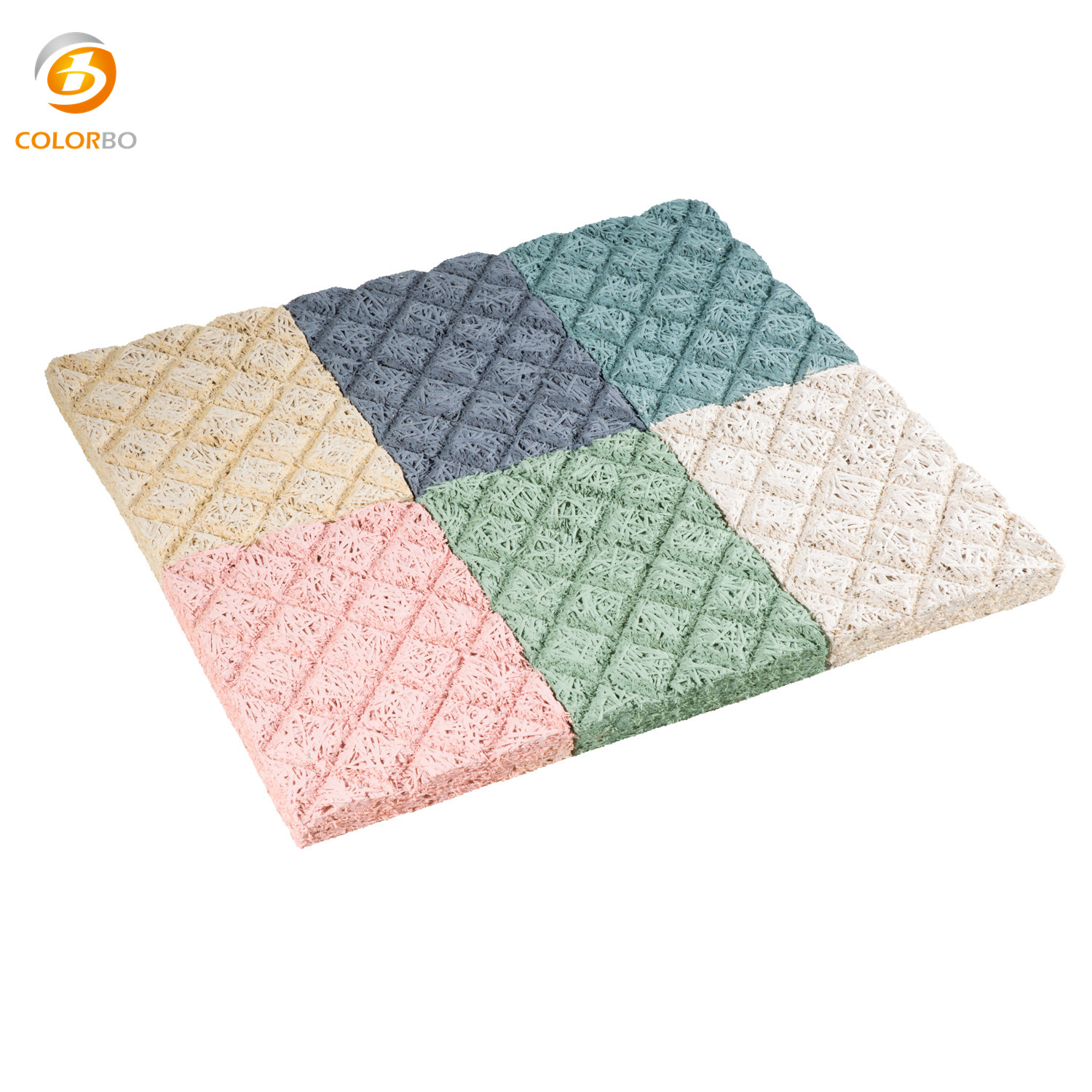
Wood wool panels provide a more substantial architectural surface for rooms that need larger treatment areas and a visibly textured finish. The Home Theater Acoustic Panel measures 1160 × 580 mm and has a thickness of 25 mm. Its construction combines wood wool, cement, and water, while its sound absorption coefficient reaches up to 0.75. Compared with small decorative tiles, this type of acoustic wall covering can treat a larger uninterrupted area with fewer panel joints.
The greater depth can be useful for living rooms, media spaces, offices, and home studios where a broader wall surface contributes to excessive reverberation. The textured face also creates a different visual effect from smooth PET felt. Nevertheless, a 25 mm acoustic wall covering remains different from a dedicated bass trap. It can contribute to middle- and higher-frequency control, but severe low-frequency modes normally require deeper absorbers or treatment positioned where bass pressure accumulates.
Room Problem | Suitable Treatment Approach | Role of the Acoustic Wall Covering | Main Limitation |
|---|---|---|---|
Flutter echo | Distributed PET or felt tiles | Reduces repeated reflections between parallel walls | Thin tiles provide limited bass control |
Harsh vocals or speech | Absorption near speaking and recording zones | Controls short reflections reaching the microphone or listener | Too much coverage can make the room dull |
Long living-room reverberation | Larger PET or wood wool treatment areas | Adds reliable absorption to reflective wall surfaces | Random decorative placement may produce little change |
Uneven bass response | Deep corner, rear-wall, or broadband treatment | Complements the wall treatment system | Ordinary wall tiles are not bass traps |
In a home studio, begin with the relationship between the speakers, listening position, and side walls. The left and right sides should remain reasonably symmetrical so that one channel does not encounter a more reflective surface than the other. A mirror test can help locate the first-reflection points. While the listener remains in the normal chair, another person moves a mirror along each side wall. The areas where a speaker becomes visible are useful starting positions for an acoustic wall covering because sound can reflect from those points toward the listener.
Treating first reflections can improve stereo imaging and reduce comb filtering, but it is only one part of the room. The ceiling may create a strong vertical reflection, especially in a low room, while the wall behind the listener can produce a delayed reflection that affects clarity. Treatment behind the speakers may also help, depending on speaker distance and room dimensions. When the rear wall is close to the listening position, thicker absorption is usually more practical than relying only on a thin acoustic wall covering.
Recording areas require attention to the path between the performer, room surfaces, and microphone. Installing every panel directly behind the microphone may not address the reflections entering its sensitive side. Panels behind and beside the performer can reduce room coloration before reflected sound reaches the capsule. A ceiling absorber may also help when the floor and ceiling form a highly reflective pair. Temporary placement is valuable before permanent installation because recorded comparisons reveal more than appearance or a simple handclap test.
Living rooms are less controlled, but the same principles still apply. Large empty walls, glass doors, hard floors, low ceilings, and opposing surfaces usually have more influence than small decorative objects. Position the acoustic wall covering near the television, loudspeakers, seating area, or a large wall opposite glass. A panel placed in an unused corner may look attractive yet provide little benefit if important reflections do not reach it. Rugs, curtains, upholstered furniture, and bookshelves can assist, although their absorption is less predictable than purpose-made acoustic treatment.
A home studio should support reliable recording and mixing decisions rather than merely feel quieter. The acoustic wall covering should reduce early reflections enough to improve stereo placement, vocal tone, and transient detail while preserving a natural listening environment. Begin with the side-wall reflection points and then assess the ceiling, front wall, rear wall, and corners. Adding treatment gradually makes it easier to hear what each change achieves and reduces the risk of over-treating the upper frequencies.
A balanced studio often combines several absorber depths. Thin decorative panels can control speech and upper-frequency reflections, while deeper panels address a wider frequency range. An air gap behind an acoustic wall covering may extend its useful absorption lower than a flush installation, although the result depends on panel construction and gap depth. The final arrangement should also remain symmetrical around the monitoring position. Unequal treatment can pull the stereo image toward one side even when the room contains enough total absorption.
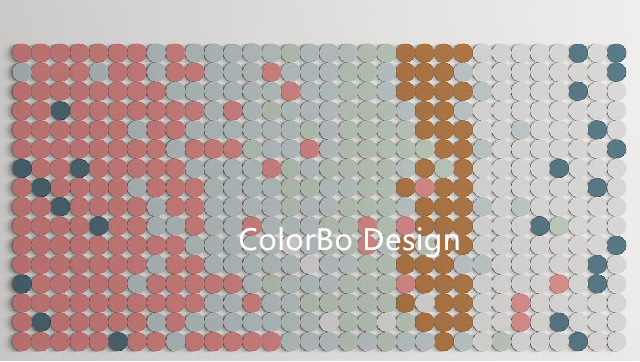
A living-room installation must work as part of the interior design. Repeated shapes, coordinated colors, and feature-wall layouts are often easier to accept than large studio-style absorbers. The Circle Studio Acoustic Panels use a modular circular format made from polyester fiber with recycled content. Their shape allows the acoustic wall covering to function as a visual composition behind seating, beside a media area, or across a large reflective wall.
Residential treatment should concentrate on the listening and conversation zone rather than covering an entire open-plan floor. Begin with surfaces close to the sofa, loudspeakers, television, or dining area, then check whether speech and playback improve from several seats. Panels should not obstruct ventilation, electrical fittings, doors, switches, or access to windows. Colors should also be reviewed under the room’s normal lighting because a high-contrast acoustic wall covering can feel visually heavier after installation than it did in a small sample.
The most common mistake is confusing sound absorption with sound isolation. An acoustic wall covering reduces reflections inside a room, but it does not independently prevent music, traffic, or conversation from passing through the building structure. Effective sound isolation requires construction measures such as greater mass, airtightness, mechanical separation, and treatment of doors, windows, ceilings, floors, and service gaps. A room can have low reverberation and still transmit substantial sound to an adjacent space.
Another mistake is buying panels by appearance alone. Shape and color matter in residential interiors, but they do not replace information about material, thickness, absorption performance, mounting requirements, or intended frequency range. Even a well-made acoustic wall covering produces limited improvement when installed away from the dominant reflections. Treating a random empty wall may be less effective than using a smaller amount of material at the side-wall reflection points or close to the main conversation area.
Installation shortcuts can also reduce performance or damage the room. The wall should be clean, dry, stable, and compatible with the selected adhesive or mechanical fixing. Removable mounting may be preferable when the room layout, loudspeaker position, or rental agreement could change. Panel weight, edge alignment, access to services, and cleaning requirements should be considered before installation. Fire performance must also be checked against the rules that apply to the specific building and location.
A staged purchasing process produces more reliable results than ordering full-room coverage immediately. Define whether the main problem is flutter echo, poor dialogue, bright vocal reflections, unstable stereo imaging, or bass buildup. Map the major reflective surfaces and choose panel depth according to the frequency range involved. Install the first section, compare recordings or listening notes, and then decide whether more acoustic wall covering is necessary. This approach reduces over-treatment, controls cost, and creates a layout based on room behavior rather than guesswork.
An effective acoustic wall covering matches the room’s sound problem, frequency range, layout, and visual requirements. Thin PET tiles can control localized speech and music reflections, while larger and deeper panels support broader treatment. Neither should be mistaken for complete soundproofing or dedicated bass control. Shanghai ColorBo Industrial Development Co., Ltd. is an acoustic-material manufacturer and supplier with PET and wood wool panel options for interior applications. Careful placement, staged installation, and practical evaluation produce better results than selecting an acoustic wall covering by appearance or quantity alone.
A: No. It mainly absorbs reflections and reduces reverberation inside the room. Preventing sound transmission requires structural isolation, airtight construction, added mass, and treatment of weak paths.
A: There is no universal percentage. Begin with the strongest reflection zones, evaluate the result, and add coverage gradually until clarity improves without making the room unnaturally dull.
A: PET supports lightweight modular layouts, while wood wool provides a thicker textured surface. Compare thickness, absorption data, appearance, mounting, and the room’s frequency problem.
A: Thin panels mainly control middle and higher frequencies. Noticeable bass treatment usually requires deeper broadband absorbers, corner systems, or purpose-designed panels with greater mounting depth.
A: Prioritize large reflective walls near the television, speakers, and seating area. Walls behind the sofa or opposite glass are often more useful than isolated decorative corners.