
Views: 0 Author: Site Editor Publish Time: 2026-07-27 Origin: Site


Installing panels wherever a wall looks empty rarely produces the most useful acoustic improvement. Effective acoustic wall covering placement begins with identifying where reflections interfere with speech, music, recordings, or movie dialogue. The strongest treatment locations depend on the sound source, listening position, room dimensions, and amount of glass, concrete, drywall, or other reflective material. By prioritizing early reflection points, opposing hard surfaces, and occupied listening zones, a room can gain clearer sound without becoming unnaturally quiet or visually overloaded.
Sound inside a room combines direct energy from a speaker or person with reflected energy returning from walls, floors, ceilings, windows, furniture, and equipment. Some reflection creates a natural sense of space, but strong reflections arriving shortly after the direct sound can blur dialogue, weaken stereo imaging, and make a room sound harsh. Acoustic wall covering should therefore intercept problematic sound paths rather than simply maximize the treated wall area. A smaller installation in the right locations can be more useful than extensive treatment placed away from active reflection zones.
Start by defining the room’s main activity area. In a home theater, this is the primary seating zone; in a studio, it is the mixing or recording position; in an office, it may be the meeting table or a group of desks. Clap once from that position and listen for a metallic ring, rapid echo, or prolonged decay. Then play familiar audio or speak at a normal volume while moving through the room. These checks help separate a general reverberation problem from a reflection issue concentrated around particular surfaces.
Furniture and equipment positions should be settled before the acoustic wall covering layout is finalized. Moving a sofa away from the rear wall, adjusting speaker angles, adding curtains, or placing a rug between speakers and listeners may reduce some reflections before panels are installed. Treatment locations selected for an empty room may become less relevant after shelves, seats, displays, and workstations are added. Placement planning should reflect the completed interior whenever possible.
For listening rooms, studios, and home theaters, side-wall early reflections usually deserve attention first. These paths travel from a speaker to a side wall and then reach the listener shortly after the direct sound. They can make a centered voice seem wider or less stable and reduce separation between instruments. Placing acoustic wall covering at these points weakens the reflected energy before it reaches the listening position. Balanced treatment on both sides is especially valuable where accurate stereo localization matters.
The mirror method provides a practical way to find these locations. Sit in the normal listening seat while another person moves a mirror horizontally along one side wall at speaker or ear height. Mark the area where a speaker becomes visible in the mirror, then repeat the process for the other speaker and opposite wall. The acoustic wall covering should address the surrounding reflection zone rather than only the exact marked point. Keeping the left and right arrangements reasonably symmetrical helps maintain a stable sound image.
The rear wall becomes more influential when seating is positioned close to it. Sound reaching this surface can return toward the listener with enough energy to muddy dialogue, reduce imaging precision, or make tonal balance seem inconsistent. Acoustic wall covering behind the seating area can help when mid- and high-frequency reflections are the main concern. A rear wall farther from the listener may also benefit from scattering or a combination of absorption and diffusion, particularly when the room should retain some sense of spaciousness.
The center of the rear-wall treatment should correspond with the occupied listening zone rather than automatically following the geometric center of the wall. A wide sofa may require treatment extending across several seats, while a single mixing position may need a more concentrated arrangement. In multi-seat rooms, listen from every important position before fixing the layout. An acoustic wall covering arrangement that improves only the center seat may need to be widened or distributed more evenly.
Flutter echo occurs when sound repeatedly travels between parallel reflective surfaces. It is often heard as a fast ring or “zing” after a hand clap, particularly in rooms with bare side walls, hard flooring, and little upholstered furniture. Treating one or both opposing walls can interrupt this repeated path. Matching rectangles are not always required directly opposite each other, because staggered acoustic wall covering can also reduce the reflection pattern while allowing more flexibility in the visual layout.
Place treatment around the heights where sound is produced and received most often. In conversational spaces, this usually includes the seated and standing voice zone. In audio rooms, speaker and listener height provide a more useful reference. Installing every panel near the ceiling while leaving the active sound path untreated may produce limited improvement. Upper-wall placement should be prioritized only when the room geometry or listening tests indicate that those surfaces are contributing strongly to the problem.
Home theater treatment should begin at the side-wall reflection points between the front speakers and main seats. The wall behind the audience is another priority when the seats are close to it, while the front wall may need treatment when reflections around the speakers reduce dialogue focus. Acoustic wall covering should be arranged around the listening plane rather than placed only beside the screen. For interiors requiring a textured absorptive surface, Home Theater Wood Wool Panels use a wood wool, cement, and water construction suitable for interior acoustic applications.
Low-frequency problems require separate judgment. Boomy bass often becomes stronger near boundaries and corners, but ordinary wall treatment is not automatically a substitute for dedicated bass control. Speaker, subwoofer, and seating positions should be adjusted before additional corner treatment is considered. This distinction prevents an acoustic wall covering intended mainly for reflection and reverberation control from being expected to solve every room-mode problem. It also helps avoid adding excessive high-frequency absorption while the bass response remains uneven.
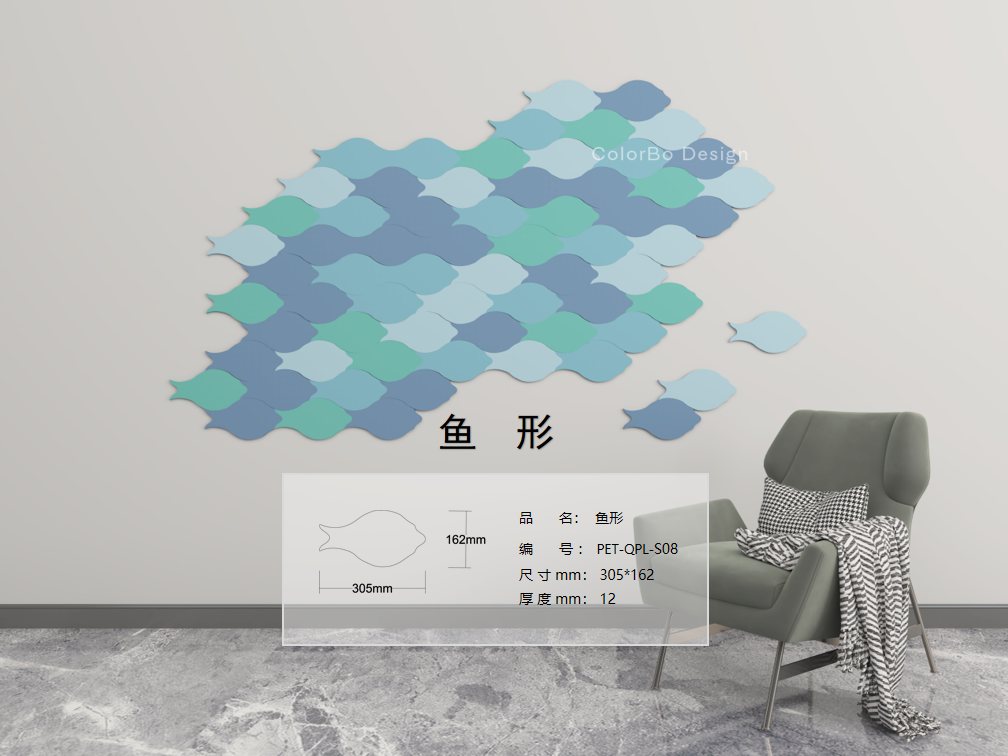
Studios need placement that supports accurate monitoring and clean microphone capture. For mixing, treat the left and right first reflection points symmetrically, then evaluate the wall behind the monitors and the area behind the listening position. Ceiling reflections may also matter when the ceiling is low or highly reflective. An asymmetrical acoustic wall covering layout can shift the perceived stereo image, making tonal and panning decisions less reliable. Temporary positioning before permanent installation can reveal whether each proposed location produces a meaningful improvement.
For voice recording, the strongest reflection may come from the wall behind the speaker, the wall behind the microphone, or nearby side surfaces. Record short samples while temporarily positioning absorptive material at each suspected location. Compare room coloration, boxiness, ringing, and speech clarity before selecting the final arrangement. Studio PET Acoustic Tiles can be distributed around equipment, shelves, and other interior features when a modular acoustic wall covering layout is preferred.
Rooms centered on speech usually benefit from distributed treatment rather than one dense group of panels in an unused corner. Place acoustic wall covering near meeting tables, workstations, seating groups, teaching areas, and large parallel surfaces that keep speech energy circulating. Spreading panels across more than one wall can reduce reflections throughout the occupied zone. This approach also avoids creating one acoustically soft end of the room while the remaining area stays highly reflective and uncomfortable for conversation.
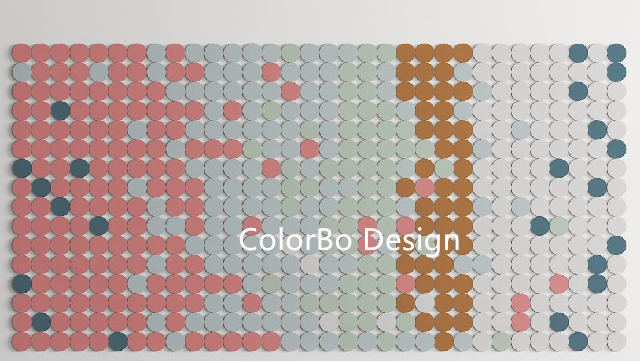
Decorative modules can make distributed treatment easier to coordinate with an interior design. Circular PET Acoustic Panels can be arranged as repeated wall elements instead of one rectangular block. Their positions should still follow acoustic priorities, including occupied zones, reflection paths, and balanced distribution. Shape and color can guide the composition, but visual preferences should not replace an evaluation of where sound repeatedly reaches the wall.
Panel height should correspond with both the sound source and the receiver. In a seated listening room, center the acoustic wall covering around speaker and ear height. In a classroom, office, restaurant, or standing collaboration area, treatment may need to extend higher because voices originate from several elevations. A broader vertical range is useful when seated and standing activities share the same space. Installing every panel along the floor or immediately below the ceiling may miss much of the active sound path.
Spacing depends on the type of problem. A concentrated group is appropriate at a clearly identified first reflection zone, while a reverberant office or living room often benefits from panels distributed across several surfaces. Gaps between modules are acceptable when the overall arrangement intercepts reflections throughout the occupied area. Continuous acoustic wall covering can create a unified appearance, but complete coverage is not automatically necessary. The goal is to control disruptive reflections without removing all of the room’s natural energy.
Symmetry is most important where accurate stereo localization matters. Matching left and right reflection treatment helps the listener receive a similar acoustic response from both sides. Speech-oriented spaces allow more flexibility because lower reverberation may matter more than a precise stereo image. Even in these rooms, placing every acoustic wall covering panel on one wall may create an uneven result unless the opposite side already contains curtains, upholstered furniture, shelving, or another surface that helps control reflections.
Install or temporarily position the highest-priority panels first, then repeat the listening tests used during planning. A hand clap should produce less sharp ringing, speech should require less effort to understand, and centered audio should sound more stable. Use identical audio content, volume, seats, and microphone positions during every comparison. Changing several variables at once makes it difficult to determine whether the acoustic wall covering placement caused the improvement or whether another adjustment was responsible.
Do not keep adding absorption simply because untreated wall space remains. Excessive treatment can remove useful high-frequency energy while leaving low-frequency problems largely unchanged, producing a room that sounds dry above and boomy below. Absorption inside a room is also different from sound isolation between rooms. Acoustic wall covering can reduce reflected energy and reverberation, but limiting transmission through a partition usually requires attention to gaps, mass, structural connections, and the complete wall assembly.
Document the final layout with room dimensions, panel positions, listening locations, and photographs. This record becomes useful when furniture, speakers, displays, or workstations are moved later. Recheck the sound after major layout changes because reflection points move with sources and listeners. A successful installation is not based on a universal percentage of wall coverage. It depends on how effectively the acoustic wall covering addresses the room’s actual activities, occupied areas, and reflective behavior.
The most effective acoustic wall covering layout follows sound behavior rather than available decoration space. Start with side-wall reflection points, nearby rear walls, and opposing hard surfaces, then adjust the height and distribution for the room’s actual users. Test each stage before adding more material, especially when bass problems or sound transmission are also present. Shanghai ColorBo Industrial Development Co., Ltd. is an acoustic materials manufacturer and supplier whose wall panel formats can support targeted, distributed, and decorative treatment plans for a range of interior applications.
A: It can reduce front-wall reflections, but side-wall first reflection points and the wall near the listening position may produce a more noticeable improvement.
A: Center them near the main voice, speaker, or listener height. Extend the treated area vertically when seated and standing activities regularly share the room.
A: No. Strategic treatment at early reflection points and active sound zones can be more useful than covering large areas that receive little reflected energy.
A: Even spacing supports visual balance, but acoustic priorities come first. Panels may be clustered at reflection points or distributed to control general reverberation.
A: It mainly controls reflections inside the room. Reducing transmission through walls usually requires sealing gaps and improving the partition’s mass, structure, or isolation.