
Views: 0 Author: Site Editor Publish Time: 2026-06-30 Origin: Site


Modern open-plan layouts frequently breed a chaotic soundscape. Hard architectural surfaces bounce voices aggressively across the room. They destroy concentration and basic speech intelligibility. Whether you manage a bustling corporate workspace or a precision recording studio, poor acoustics severely handicap daily operations. Uncontrolled flutter echoes easily ruin otherwise professional audio recording environments. Excessive ambient noise forces employees into a constant state of distraction.
For decades, builders relied heavily on cheap polyurethane acoustic foam. However, this traditional material degrades quickly and looks highly unprofessional in modern spaces. Consequently, acoustic engineers and interior architects are fundamentally shifting their approach. They now heavily favor sustainable, high-density PET (polyethylene terephthalate) materials for acoustic treatments.
This comprehensive guide serves as your objective evaluation framework. We will help you thoroughly assess technical specifications, compliance standards, and specific application fits. You will learn exactly what data to verify before you commit to a full 3D PET panel rollout. Our goal is to ensure you achieve both architectural beauty and verifiable acoustic performance.
Acoustic vs. Aesthetic Function: 3D PET panels reduce reverberation (RT60) while providing architectural visual depth, but they absorb internal reflections, they do not soundproof a room from external noise.
Performance Metrics: Effective evaluation requires verifying the Noise Reduction Coefficient (NRC), material density (kg/m³), and Class A fire ratings (e.g., ASTM E84 / EN 13501-1).
Application Nuance: Office installations prioritize broad speech-frequency absorption; studios require strategic placement for mid-to-high frequency control, often paired with dedicated bass traps.
Installation Reality: Rollouts range from simple peel-and-stick DIY to commercial Z-clip mounting systems; understanding the wall substrate is critical for longevity.
Traditional open-cell polyurethane foam dominates budget studio setups. However, it oxidizes very quickly. Exposure to standard UV room lighting and ambient air causes the foam to crumble. It discolors dramatically over time. You often see black polyurethane turn a dusty, ugly yellow within two years. Conversely, heat-pressed polyester fiber offers incredible structural stability. Manufacturers compress PET fibers under extreme heat. This creates a dense, rigid structure. These panels never shed irritating particles into the air. They maintain their physical shape and vibrant colors for many years.
Flat acoustic panels certainly absorb sound. But 3D geometries perform significantly better. Engineered ridges, pyramids, and wave patterns do much more than look attractive. They drastically increase the overall active surface area. More surface area means substantially higher sound absorption capabilities per square foot. Furthermore, uneven profiles actively help diffuse sound waves. They scatter harsh reflections effectively across the room. This prevents audio dead spots and maintains a natural room tone.
Modern commercial builders strictly demand green materials. High-quality PET acoustic panels meet this modern need perfectly. Top-tier manufacturers create them using up to 100% post-consumer recycled plastic bottles. The production process utilizes heat bonding instead of toxic chemical glues. Therefore, the final panels emit zero VOCs (Volatile Organic Compounds). This makes them highly favorable for maintaining excellent indoor air quality. Deploying these sustainable panels actively helps commercial buildings achieve prestigious LEED and WELL certifications.
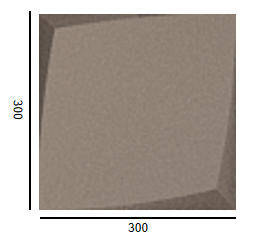
Evaluating a Polyester Fiber PET Acoustic 3D Wall Panel for Office and Studio requires looking past basic marketing materials. You must verify objective acoustic and safety metrics.
The Noise Reduction Coefficient (NRC) dictates how much sound a panel absorbs. An NRC rating typically ranges from 0.0 to 1.0. An NRC of 0.85 means the panel absorbs 85% of sound hitting it. PET panels generally score between 0.40 and 0.85 depending on thickness and mounting depth. You must remain highly skeptical of manufacturers claiming "100% noise cancellation." No single acoustic panel completely cancels noise. They manage internal reverberation, not absolute transmission.
Density matters far more than sheer panel volume. Standard PET panels usually range from 1500g/sqm to 2000g/sqm. Higher density tightens the fiber matrix, improving lower-mid frequency absorption. However, 3D panels introduce a unique complication. The thickness naturally varies across the textured profile. You must explicitly assess the average overall density. Do not rely solely on the thickest point of the 3D extrusion. A panel might feature a deep pyramid shape but remain mostly hollow underneath.
Fire safety standards remain non-negotiable for commercial spaces. You cannot install highly flammable materials in offices or public studios. Building codes legally require Class A (or Class 1) fire retardancy. This rating ensures the material actively resists flame spread and limits smoke production. Always stress the importance of requesting verifiable lab test certificates. Acceptable documentation includes official SGS, CE, or UL test reports. Never take bold marketing claims at face value when safety is involved.
Below is a quick reference chart contrasting typical open-cell foam with high-density PET.
Feature | Traditional Polyurethane Foam | 3D PET Acoustic Panels |
|---|---|---|
Lifespan | 1 - 3 years (Crumbles and oxidizes) | 10+ years (Structurally stable) |
VOC Emissions | Often high (Off-gassing common) | Zero (No chemical binders) |
Durability | Very fragile; tears easily | Impact resistant; highly rigid |
Aesthetic Quality | Utilitarian; collects dust | Architectural; visually striking |
Fire Safety | Often requires chemical treatment | Inherently flame retardant options |
You cannot use a one-size-fits-all approach for acoustic design. Corporate offices and recording studios have fundamentally different audio objectives. You must tailor your panel deployment strategy accordingly.
In corporate environments, uncontrolled voices trigger the Lombard effect. As ambient noise rises, people speak louder to hear themselves. This creates a deafening loop.
Define the Objective: Your primary goal is lowering the ambient noise floor. You also want to drastically increase speech privacy between workstations.
Target First-Reflection Points: Identify where sound first hits the walls in conference rooms. Mount panels exactly at ear-level along these parallel walls. This prevents vocal flutter between hard surfaces.
Create Feature Walls: Utilize the aesthetic strengths of 3D panels. Install them as visually appealing feature walls directly behind reception desks. You can also deploy them in open collaboration zones to quietly absorb casual chatter.
Ceiling Cloud Integration: If wall space remains limited, suspend PET panels horizontally from the ceiling directly above noisy departmental groupings.
Audio professionals demand clinical acoustic accuracy. A recording space must sound perfectly tight and controlled.
Define the Objective: You must tame harsh flutter echoes immediately. Controlling the overall room decay time (RT60) is absolutely essential for accurate audio monitoring and recording.
Strategic Placement: Mount 3D PET panels strategically at the primary mixing reflection points. Place them directly behind studio monitors and on the side walls adjacent to the listening position. The 3D geometric shapes will brilliantly diffuse high-frequency reflections.
Acknowledge Limitations: You need a reality check regarding physics. PET 3D panels excel at controlling mid-to-high frequencies (human voice, cymbals, guitars). However, they completely lack the required mass and physical depth to absorb sub-bass frequencies.
Complementary Acoustic Design: Frame your PET panels as an excellent complement to heavier treatments. You must always pair them with heavy broadband absorbers or dedicated corner bass traps for a fully flat frequency response.
Choosing the correct mounting architecture determines the long-term success of your acoustic project. Your chosen method scales directly with the size of your installation.
Direct adhesion works best for smaller studio setups. Many users rely on heavy-duty construction adhesive or industrial double-sided tape (VHB tape). This creates a permanent, flush mount against the drywall. It looks incredibly clean. However, you must carefully consider the removal process. Ripping adhered panels off the wall will almost certainly damage the underlying drywall. You will need to patch and paint the wall later.
Mechanical fastening provides much better flexibility for commercial environments. Companies frequently relocate or redesign office spaces. Therefore, we highly recommend using impaling clips, aluminum Z-clips, or standoff hardware. Z-clips lock the panels securely onto a wall rail. This commercial system allows facilities teams to unclip and move panels instantly without destroying the wall substrate.
Cutting and on-site modification present a serious challenge. High-density PET is extremely tough. Standard utility knives usually fail. They leave ugly, frayed edges that ruin the premium aesthetic. You must use specialized heavy-duty blades. For larger commercial rollouts, contractors use CNC routing machines to ensure perfectly clean, factory-grade edges around outlets and light switches.
Maintenance and ongoing upkeep are refreshingly simple. High-quality PET naturally repels most dust. We recommend implementing a basic cleaning protocol. Your janitorial staff should gently vacuum the panels monthly using a soft brush attachment. For occasional stains, simply spot clean the area with a mild detergent and a damp cloth. Most importantly, PET exhibits incredible resistance to ambient moisture and mold. This gives it a massive sanitary advantage over traditional fabric-wrapped fiberglass panels.
Commercial acoustic rollouts represent a significant capital investment. Purchasing managers and acoustic contractors must vet their suppliers aggressively before placing bulk orders.
B2B commercial considerations go beyond the unit price. You must ask vendors about their Minimum Order Quantities (MOQs) and accurate production lead times. A delayed shipment easily derails construction schedules. Furthermore, you must explicitly demand batch color consistency guarantees. Textile dyes vary slightly between manufacturing runs. If you order panels months apart, the colors might clash visibly on a massive feature wall.
Verifying acoustic data prevents costly mistakes. Unethical manufacturers occasionally publish "dummy data" to inflate their specifications. They might test an NRC rating by leaving a massive 12-inch air gap behind the panel in the lab. This artificially inflates the low-frequency absorption score. When you install that panel flush against your office wall, it drastically underperforms. Always ask to see "Type A" mounting test results. This proves the lab tested the panel directly against a solid wall.
We always advise ordering a physical sample first. Never buy thousands of panels based solely on an online catalog. When the sample arrives, physically test its structural rigidity. You should squeeze it firmly. It should not easily crush or permanently dent under standard finger pressure. Finally, pin the sample to your wall. Evaluate the exact color matching under the actual lighting temperature of your target room.
Superior Materials Win: High-density PET 3D panels officially represent the modern intersection of striking architectural aesthetics and verifiable acoustic control. They outlast and outperform traditional foams.
Safety First: Never compromise on commercial fire codes. Always demand verifiable Class A fire rating lab reports before finalizing your procurement.
Targeted Application: Match your installation strategy to your space. Offices need broad speech absorption, while studios require precise high-frequency diffusion paired with heavier bass traps.
Smart Installation: Plan your mounting architecture carefully. Use mechanical Z-clips for scalable office deployments to avoid future drywall repair costs.
Actionable Next Steps: Conduct a basic acoustic assessment of your specific space today. Calculate the total square footage of your hard surfaces. Identify your highest-reflection zones. Finally, request detailed technical specification sheets from your shortlisted vendors before fully committing to an architectural design.
A: No. We must clarify the fundamental difference between sound absorption and soundproofing. PET panels provide sound absorption. They improve internal acoustics by massively reducing echo and reverberation. Soundproofing means adding dense mass and structural decoupling to literally block sound transmission through a wall. That requires heavy construction-level interventions, not surface panels.
A: A realistic rule of thumb involves surface area coverage. Covering roughly 15% to 25% of the total wall and ceiling surface area is usually sufficient. This percentage will noticeably reduce reverberation and lower the ambient noise floor in a standard corporate office or professional audio control room.
A: Yes. High-quality PET is completely non-toxic and absolutely free of harmful chemical binders. It does not shed dangerous breathable fibers into the air, unlike exposed fiberglass treatments. Furthermore, the material is typically low-VOC or no-VOC, making it highly safe for prolonged daily human exposure in closed rooms.